Why Do Knives Dull Quickly Tips for Lasting Sharpness?

Time:2026-04-29 Author:Madeline
0%

Knives are essential tools in kitchens around the world. Yet, many people wonder, why do knives become dull quickly? Understanding the reasons behind this phenomenon can help you maintain your knives effectively. Various factors contribute to knife dullness, from improper usage to inadequate maintenance.

Frequent contact with hard surfaces, like glass or ceramic, accelerates the dulling process. Cutting through tough materials also impacts sharpness. Additionally, neglecting regular honing or sharpening exacerbates the issue. This leads to the need for replacements or professional sharpening.

Embracing better cutting habits can extend the life of your knives. Using appropriate cutting boards and practicing proper techniques makes a significant difference. It's crucial to reflect on your knife-handling practices. Small changes can keep your knives sharp and reliable for longer periods.
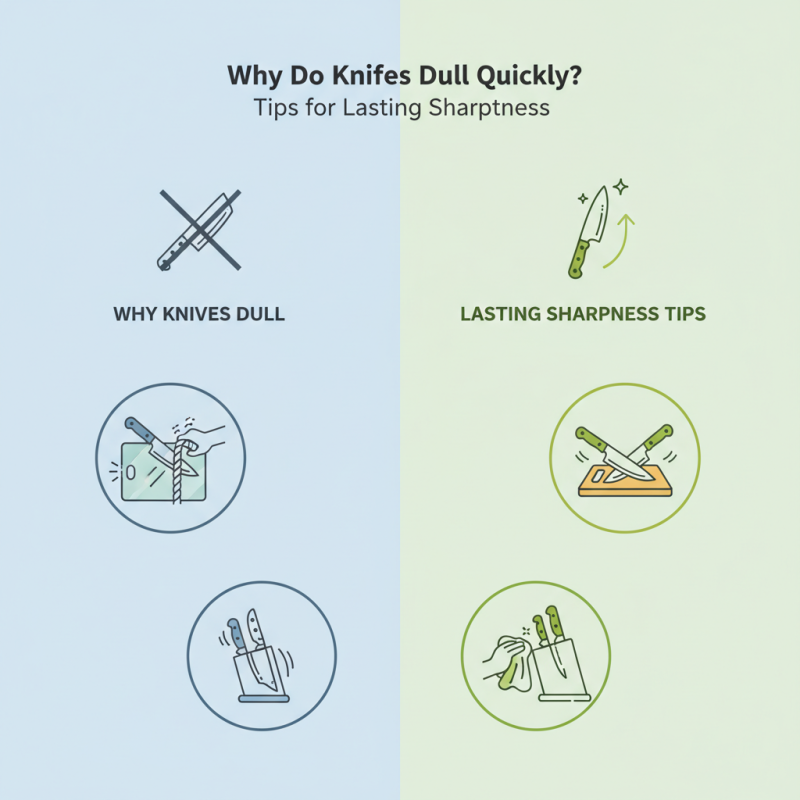
Why Do Knives Dull Quickly Tips for Lasting Sharpness?

Understanding Knife Sharpness and Dulling Factors

Knife sharpness is essential for effective food preparation. Understanding what causes knives to dull can help you maintain them better. Several factors contribute to knife dullness. One primary reason is the type of cutting surface you use. Hard surfaces, like ceramic or glass, can quickly wear down the blade. In contrast, wooden or plastic cutting boards are gentler on knives.

Environmental elements also play a role. Exposure to moisture can cause blades to rust and deteriorate. Even humidity in the air may affect the steel quality over time. Additionally, improper storage can lead to unintentional damage. Storing knives loosely in drawers can result in nicks and blunt edges.

Daily habits matter too. Cutting through bones or frozen food can harm sharp edges. Regularly honing your knife is essential but often overlooked. Many people assume that sharpening is enough. In reality, honing is needed to realign the blade. This step enhances the knife’s cutting performance. Addressing these factors will help you ensure lasting sharpness over time.

Why Do Knives Dull Quickly Tips for Lasting Sharpness

Factor Description Dulling Impact Sharpness Maintenance Tips
Material Hardness The hardness of the steel used in the blade affects how well it holds an edge. High hardness can retain sharpness longer. Choose blades made from high-quality stainless or carbon steel.
Cutting Surface Using inappropriate surfaces like glass or hard ceramic can dull knife edges quickly. Increases wear on blade edges. Use wooden or plastic cutting boards.
Washing Method Dishwasher cleaning can cause chips and dullness due to impacts with other items. Frequent exposure to harsh conditions can hasten dulling. Hand wash and dry knives immediately after use.
Storage Storing knives loosely in a drawer can cause edge collisions, resulting in dullness. May lead to chips and nicks. Use a knife block or magnetic strip to protect edges.
Frequency of Use More frequent use leads to quicker dulling of edges. Edges wear down with regular cutting. Regularly sharpen your knives to maintain their edge.

Common Causes of Rapid Knife Dulling

Knives can dull quickly due to several common factors. One major cause is improper cutting surfaces. Using hard surfaces, like glass or stone, can chip the blade. Soft surfaces, such as wood or plastic, are better choices and help maintain sharpness. According to a report from the American Knife and Tool Institute, over 60% of knife users do not consider their cutting boards when evaluating blade longevity.

Another contributing cause is the technique used while cutting. Many people use excessive force or press too hard on the knife. This can lead to microchips along the edge. Research indicates that proper cutting technique can extend knife life by as much as 30%. Adopting a gentle slicing motion rather than aggressive chopping can help keep blades sharper longer.

Tips for maintaining knife sharpness include regular honing. This process realigns the blade edge without removing material. Moreover, cleaning knives right after use prevents corrosion. Storing knives in protective sheaths or blocks also prevents wear. Such simple steps can significantly enhance a knife's lifespan and performance.

Best Practices for Maintaining Knife Sharpness

Maintaining knife sharpness is crucial for any kitchen. Dull knives not only make cooking tedious but can also pose safety risks. One simple tip is to regularly hone your knives with a honing steel. This tool aligns the blade's edge, helping maintain its sharpness between full sharpenings. A few swipes on either side can make a noticeable difference.

Another essential practice is proper storage. Knives should be stored in a way that protects their edges. A knife block, magnetic strip, or blade guards can prevent nicks and chips. Avoid tossing knives in a drawer where they can clatter against other utensils, causing irreparable damage over time. Cleaning knives immediately after use also aids in preserving sharpness. Residue can lead to corrosion and dull blades.

Finally, consider how you use your knives. Cutting on hard surfaces, like glass or ceramic, can wear them down quickly. Instead, use wooden or plastic cutting boards. Be mindful of your cutting techniques as well. Avoid twisting the knife, as this can create uneven wear. Reflecting on these habits can lead to longer-lasting sharpness.

Tools and Techniques for Sharpening Knives

Knife maintenance is crucial for both safety and performance in the kitchen. A dull knife can lead to accidents and inefficient cutting. Regular sharpening is the best way to maintain the edge. There are several tools and techniques to help keep your knives sharp.

Using a whetstone is one of the most effective methods for achieving a sharp edge. It may take practice, but learning the right angle is key. Maintaining a consistent angle while sharpening helps create a more refined edge. Honing rods are also useful for daily touch-ups. They realign the blade without removing much material. For those with less experience, pull-through sharpeners can provide a quick fix. However, they may not create the same level of sharpness.

Here are some tips to ensure your knives stay sharp longer. Always hand wash your knives instead of using a dishwasher. The harsh environment can chip the blade. Storing knives in a block or on a magnetic strip prevents dulling. Avoid placing them in a drawer with other utensils. Each detail matters when caring for knives. This process is not perfect; each cook must find their rhythm.

Knife Dulling Factors and Sharpness Maintenance

Tips for Proper Knife Storage and Care

Proper knife storage and care are essential for maintaining sharpness. A poorly stored knife can dull quickly. Consider using a magnetic strip or a dedicated knife block. These options keep your blades protected and minimize contact. Avoid tossing knives in a drawer. This can lead to nicks and dull edges.

Cleaning is also crucial. Always wash knives by hand with mild soap. Avoid putting them in the dishwasher, where harsh detergents and high heat can damage the blade. After cleaning, dry the knives immediately. Ignoring rust can be detrimental.

Regular honing helps maintain sharpness. A honing steel is an excellent tool for this. It realigns the blade's edge, keeping it sharp longer. Remember that even with great care, every knife will eventually need sharpening. Think about how you use your knives daily. Do you use them on hard surfaces? This can lead to quicker dulling. Assess your habits and make improvements for lasting sharpness.

FAQS

: What causes knives to dull quickly?

: Improper cutting surfaces, like glass or stone, can chip the blade. Soft surfaces help maintain sharpness better.

How can cutting technique affect knife lifespan?

Using excessive force or pressing too hard can create microchips. A gentle slicing motion extends knife life by 30%.

What is honing, and why is it important?

Honing realigns the blade edge without removing material. It helps maintain sharpness and prolongs knife lifespan.

How should I clean my knives?

Always hand wash knives with mild soap. Avoid dishwashers, which can chip blades and cause damage.

What is the best way to store knives?

Use a magnetic strip or knife block. Avoid tossings knives in a drawer, as this leads to dulling and nicks.

Can I use pull-through sharpeners for sharpening?

Yes, they provide a quick fix, but may not achieve the same sharpness as a whetstone. Practice makes perfect.

What should I avoid to keep knives sharp?

Avoid cutting on hard surfaces and using excessive force. Both habits can lead to quicker dulling.

How can I improve my knife care routine?

Reflect on your storage and cleaning habits. Assessing your technique can lead to better maintenance and performance.

Conclusion

Understanding why do knives become dull quickly is essential for anyone who uses them frequently in the kitchen. Several factors contribute to rapid dulling, including improper cutting techniques, using knives on hard surfaces, and exposure to moisture or improper cleaning methods. By recognizing these common causes, you can take proactive steps to maintain the sharpness of your knives.

To ensure lasting sharpness, best practices include regularly honing your knives, using appropriate cutting boards, and avoiding contact with hard materials. Additionally, employing the right tools and techniques for sharpening can significantly extend the life of your blades. Proper storage, such as using knife guards or magnetic strips, and taking care of your knives will also help prevent premature dulling, ensuring that they remain effective for a long time.

Madeline

Madeline

Madeline is a dedicated marketing professional with a wealth of expertise in our company's core offerings. With a keen understanding of the industry, she brings a unique perspective to her role, consistently delivering high-quality content that highlights the superior aspects of our products. As......