Busy kitchens cannot depend on speed alone. They need a practical system that reduces movement, waiting, and repeated handling. This article explores China top kitchen equipment and its role in faster food preparation. It focuses on equipment that supports real kitchen routines, not impressive specifications alone.
Many chefs begin by improving the work triangle between storage, washing, and cooking areas. A stainless-steel preparation table keeps knives, boards, bowls, and ingredients within reach. Commercial vegetable cutters can produce consistent slices in minutes. High-capacity steamers and induction cookers also help staff manage several orders with better heat control. These details matter during a crowded lunch service. Small delays become expensive.
The key question is how to prepare food faster in the kitchen without weakening quality or safety. Reliable equipment should be easy to clean, simple to operate, and suitable for the kitchen’s daily volume. Professional buyers should check material thickness, motor power, spare parts, energy use, and after-sales support. Product claims deserve testing. A machine may look efficient but perform poorly with wet vegetables or uneven portions. That happened in one trial kitchen, where an oversized cutter created more trimming waste than expected.
Speed is not always improvement. Staff training, ingredient planning, and equipment placement still shape the result. Test a small batch. Measure preparation time. Review the waste. Then adjust the workflow before making a larger investment. This careful approach helps restaurants choose practical China-made equipment and build a faster, safer, and more dependable kitchen.
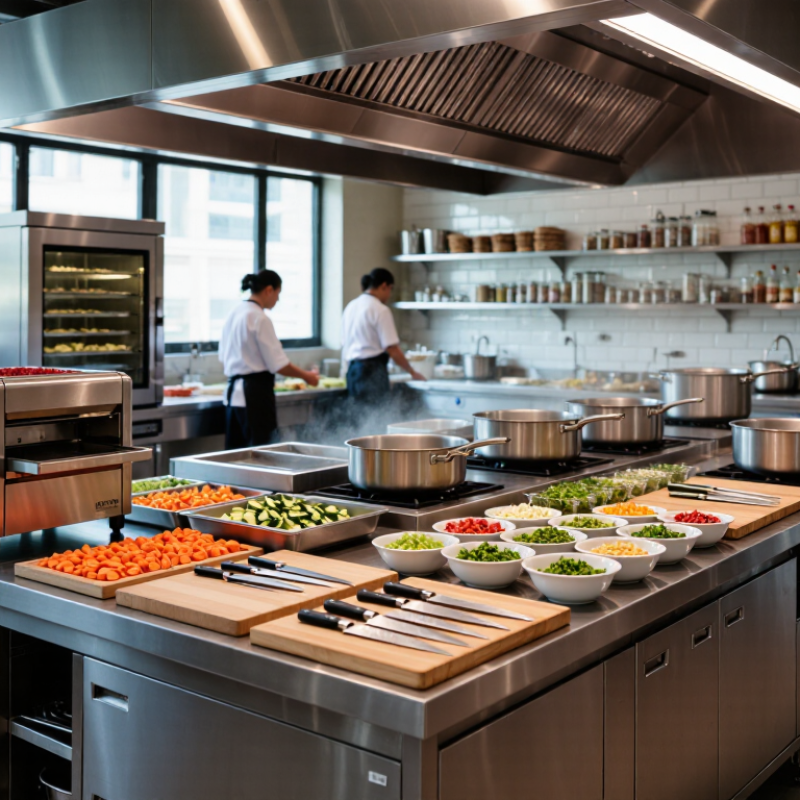
China’s top kitchen equipment is designed to shorten preparation time through practical, measurable features. High-speed induction cookers deliver steady heat and respond quickly to temperature changes. Combi ovens can steam, bake, and roast in one chamber, reducing transfers between appliances. Programmable controls also help staff repeat recipes with fewer pauses.
Labor pressure makes this efficiency valuable. The U.S. Bureau of Labor Statistics projects about 1.2 million annual openings in food preparation and serving occupations from 2023 to 2033. Equipment that supports portioning, rapid cooking, and easy cleaning can reduce dependence on constant manual work. ENERGY STAR reports that certified commercial fryers use at least 13% less energy than standard models and offer higher production efficiency. Faster output matters, but energy waste still affects margins.
From hands-on kitchen observation, small details often decide real speed. Removable filters, wide access doors, and smooth stainless-steel surfaces reduce cleaning delays. Some systems connect temperature sensors with digital timers, helping prevent overcooking during busy periods. However, automation is not magic. Poor staff training or crowded workstations can erase its benefits. A faster oven may even create bottlenecks when cooling space is limited. Operators should test batch size, recovery time, and cleaning routines before choosing equipment. The best setup is not always the most advanced one.
China Top Kitchen Equipment: How to Prepare Food Faster?
Choosing the Right Equipment for Different Food Preparation Tasks
Speed starts with matching equipment to each task, not buying the largest machine. A vegetable station needs sharp cutting tools, stable boards, and nearby washing. Batch cooking benefits from convection or combi ovens with programmable temperature control. For sauces, induction burners provide fast heating and precise adjustments. I have seen teams lose minutes because ingredients travel across the kitchen. Layout matters as much as power. The National Restaurant Association’s 2024 industry report identifies staffing pressure as a major operator concern, so equipment should be easy to learn.
Choose equipment by measuring real workflow. A slicer suits repeated, uniform cuts. A food processor handles chopping, mixing, and puréeing. A blast chiller supports safer, faster cooling after bulk production. Refrigeration also deserves attention. ENERGY STAR reports that foodservice facilities use about 2.5 times more energy per square foot than other commercial buildings. Efficient equipment can reduce operating pressure, but purchase cost is not the only measure. Cleaning time, noise, repair access, and daily capacity matter too.
Tips: Track preparation minutes for three busy shifts. Compare actual portions per hour. Test one task before replacing an entire station. A larger machine may create more waste. That assumption needs checking. My own weak point is trusting specifications too quickly; staff feedback often reveals the better choice.
China Top Kitchen Equipment: How to Prepare Food Faster?
Organizing Ingredients and Workstations for Efficient Kitchen Operations
A fast kitchen begins with a clear path, not expensive equipment alone. In a busy preparation area, I keep knives, cutting boards, scales, and mixing bowls within one arm’s reach. Frequently used tools stay between waist and shoulder height. Heavy appliances belong on stable, lower shelves. This reduces unnecessary movement and lowers the risk of spills.
Ingredients should follow the cooking sequence. Dry goods can stay in labeled containers, while chilled items need visible date labels and easy access. I prepare onions, herbs, sauces, and proteins in separate trays before service begins. Small stainless-steel containers work well because staff can identify portions quickly. Keep it simple. A crowded counter slows everyone.
Workstations also need clear roles. One area can handle washing and trimming, another can manage cutting, and a third can support cooking or plating. Appropriate commercial kitchen equipment, such as efficient prep tables, storage racks, and temperature-controlled units, should support this flow. Equipment placement must leave enough space for cleaning and safe movement. In practice, perfect organization is difficult. I sometimes prepare too many ingredients, creating waste and confusion. Reviewing leftover portions after each shift helps correct the next plan. A short reset between tasks often saves more time than rushing.
| Operational Area | Recommended Practice | Key Equipment or Storage Method | Measured Target | Typical Time Saving | Food Safety Control |
|---|---|---|---|---|---|
| Ingredient Receiving | Check quantities, temperatures, packaging condition, and use-by dates immediately after delivery. | Receiving table, calibrated probe thermometer, labeled storage containers | 5–10 minutes per delivery | Reduces put-away delays by 15–20% | Chilled food at 5°C or below; frozen food remains solid |
| Dry Ingredient Storage | Group frequently used items by recipe section and place the most-used ingredients between waist and shoulder height. | Adjustable shelving, sealed containers, date labels, FIFO layout | Ingredient retrieval under 30 seconds | Cuts walking and searching time by 10–15% | Store food at least 15 cm above the floor |
| Cold Storage | Separate raw meat, seafood, ready-to-eat foods, and prepared ingredients on clearly identified shelves. | Reach-in refrigerator, color-coded bins, shelf labels | One-step access to prepared items | Reduces cross-traffic by 10–12% | Keep refrigerator temperature at 5°C or below |
| Ingredient Portioning | Weigh and portion ingredients before the cooking period using recipe-specific containers. | Digital scale, portion trays, measuring utensils, prep labels | Portion variance within ±5% | Shortens cooking preparation by 20–30% | Label preparation date and discard date |
| Vegetable Preparation | Wash, trim, cut, and store vegetables in batches according to the expected menu volume. | Food-preparation sink, cutting boards, vegetable cutter, perforated containers | Batch preparation in 15–25 minutes | Improves cutting productivity by 25–40% | Use separate boards for raw proteins and produce |
| Protein Preparation | Process raw proteins in a dedicated zone located close to refrigeration and handwashing facilities. | Stainless-steel worktable, dedicated knives, meat trays, handwashing sink | Movement distance under 5 meters | Reduces handling steps by 15–25% | Prevent raw-food contact with ready-to-eat ingredients |
| Workstation Layout | Arrange equipment in the order of use: storage, washing, cutting, cooking, plating, and dispatch. | Linear or compact U-shaped workstation layout | A complete task cycle in 3–5 steps | Reduces unnecessary movement by 20–35% | Keep emergency exits and ventilation areas unobstructed |
| Cooking Equipment | Preheat cooking equipment before the service period and assign each appliance to a defined task. | Induction cooker, combi oven, fryer, griddle, holding cabinet | Preheating completed before peak service | Increases batch consistency and reduces idle time | Verify internal cooking temperatures with a calibrated thermometer |
| Batch Cooking | Prepare high-volume menu components in controlled batches instead of cooking every order from the beginning. | Steam kettle, tilting pan, stockpot, hot-holding equipment | Batch size based on 30–60 minutes of demand | Can reduce peak-order preparation time by 20–35% | Hold hot food at 60°C or above and monitor regularly |
| Plating and Dispatch | Place plates, garnishes, sauces, utensils, and order tickets in the sequence used for final assembly. | Pass counter, heat lamp, condiment rail, ticket holder | Plate assembly in 60–90 seconds | Improves order handoff speed by 15–25% | Keep ready-to-eat food protected from contamination |
| Tool Organization | Store knives, tongs, ladles, and measuring tools at the point of use rather than in a distant central drawer. | Wall rail, utensil rack, knife holder, labeled drawers | Frequently used tools within arm’s reach | Saves approximately 5–10 seconds per task | Clean, sanitize, and air-dry tools between uses |
| Cleaning Workflow | Use a continuous clean-as-you-go routine and remove waste before it blocks the work area. | Three-compartment sink, waste sorting bins, sanitizing solution, floor squeegee | Clear surfaces every 15–30 minutes | Reduces end-of-shift cleaning time by 20–30% | Follow approved sanitizer concentration and contact time |
| Daily Performance Review | Record preparation time, order delays, ingredient waste, and equipment downtime after each service period. | Production checklist, temperature log, waste log, maintenance record | Review completed once per shift | Supports continuous improvements of 5–10% over time | Keep traceability and temperature records accurate and current |
High-speed cooking equipment can shorten preparation time, but speed must never replace control. In a busy Chinese commercial kitchen, a combi oven, rapid steamer, or automated cutter can reduce repetitive work and improve portion consistency. Yet every machine needs a written operating procedure, trained staff, and a visible temperature record. The 2022 FDA Food Code requires cooked food to cool from 57°C to 21°C within two hours, then to 5°C within six hours. Fast processing only helps when these limits remain measurable.
Keep hands away from moving blades. Use guards, interlocks, and a complete stop before cleaning. Steam equipment creates another hazard: open the door slowly, stand to the side, and let pressure escape. The U.S. Occupational Safety and Health Administration reports that lockout/tagout prevents unexpected machine energization during servicing. That rule matters, even during a rushed lunch shift. Rushing causes mistakes.
Food safety also depends on the cold chain. The U.S. Department of Agriculture identifies 4°C to 60°C as the bacterial “danger zone” and recommends refrigerating perishables within two hours. Place hot food in shallow pans, leave space around them, and verify the center temperature with a sanitized probe. A display panel can look reassuring, but it may not reflect the coldest or hottest point. Staff should question readings, recalibrate probes, and record exceptions. Equipment makes food faster; disciplined people make it safe.
Fast preparation depends on equipment condition, not only motor power. A sharp blade, stable temperature, and clean work surface reduce repeated handling. Inspect cutting edges before each shift. Check loose screws, worn seals, and unusual vibration. Small delays multiply. A mixer needing two extra minutes per batch can disrupt an entire service. Staff should record these signs, even when the kitchen still appears productive.
Daily cleaning protects speed as well as hygiene. Remove food residue from vents, joints, and feed openings after cooling and isolating equipment safely. Dried residue creates friction and can make controls respond slowly. Check thermometer readings against a reliable reference on a planned schedule. Calibration errors may produce uneven cooking, forcing teams to repeat trays. That matters. Maintenance instructions should guide inspection intervals, lubrication, and replacement parts.
A simple log can show patterns that memory misses. Record operating hours, cleaning times, temperature checks, and small repairs. Review it weekly with the staff member using the equipment most often. Their observations are valuable. I would not pretend every delay comes from poor maintenance. Overloaded batches, rushed setup, and unclear training also reduce preparation speed. Still, consistent care keeps performance more predictable, especially during busy periods when one overlooked fault can stop several tasks.
It shortens cooking and cutting time. Portion sizes become more consistent. Speed still needs control.
Each machine needs written instructions, trained users, and visible temperature records. Keep procedures near the equipment.
Keep hands away from blades. Use guards and interlocks. Stop the machine completely before cleaning.
Open the door slowly. Stand to one side. Let pressure escape first. Steam burns quickly.
Cool cooked food from 57°C to 21°C within two hours. Then reach 5°C within six hours. Record actual readings.
Refrigerate perishable food within two hours. Use shallow pans with space around them. Check the center with a sanitized probe.
Not always. The display may miss the hottest or coldest area. Staff should question readings and recalibrate probes.
Inspect blades, screws, seals, vents, and unusual vibration before each shift. Small faults become large delays.
Record operating hours, cleaning, temperatures, and repairs. Review the log weekly. Memory misses patterns.
Overloaded batches, rushed setup, and unclear training can create delays. I would not blame every problem on equipment.
China’s top kitchen equipment can help professional and commercial kitchens prepare meals faster by combining efficient design, reliable performance, and practical automation. High-capacity food processors, rapid heating appliances, powerful mixers, and well-designed preparation tools can reduce repetitive manual work and improve consistency. To understand how to prepare food faster in the kitchen, operators should select equipment according to each task, such as chopping, slicing, blending, cooking, or holding food at a safe temperature. Choosing the correct capacity and function prevents delays and unnecessary handling.
An organized workstation also supports faster operations. Ingredients should be measured, labeled, and placed close to the equipment where they will be used, while preparation areas should follow a logical workflow. High-speed cooking and processing equipment must be operated according to its instructions, with appropriate training and safety precautions. Regular cleaning, inspection, lubrication where required, and timely replacement of worn parts help maintain stable performance. With suitable equipment, organized workstations, safe operating practices, and consistent maintenance, kitchens can increase preparation speed while preserving food quality and operational reliability.

DRS Boards