In the world of culinary arts, the ability to sharpen knives at home is invaluable. Renowned knife specialist, John Anderson, emphasizes, "A sharp knife is a chef's best friend." Mastering how to sharpen knives at home not only improves your cutting techniques but also enhances kitchen safety. Dull knives can slip and cause accidents, making it essential to keep your tools in top shape.
Imagine facing a ripe tomato with a dull blade. It crushes rather than slices. This frustration can lead to mishaps and wasted food. However, with the right techniques and tools, you're empowered to maintain sharp, effective blades. Whether you're a seasoned cook or a novice, learning how to sharpen knives at home can transform your culinary experience.
Yet, the journey isn't without challenges. Achieving the perfect angle while sharpening takes practice. You might find yourself adjusting your technique multiple times. Don't be discouraged; this is part of the learning process. Embrace the journey of refining your skills in how to sharpen knives at home, and relish the satisfaction of using sharp knives that elevate your cooking.
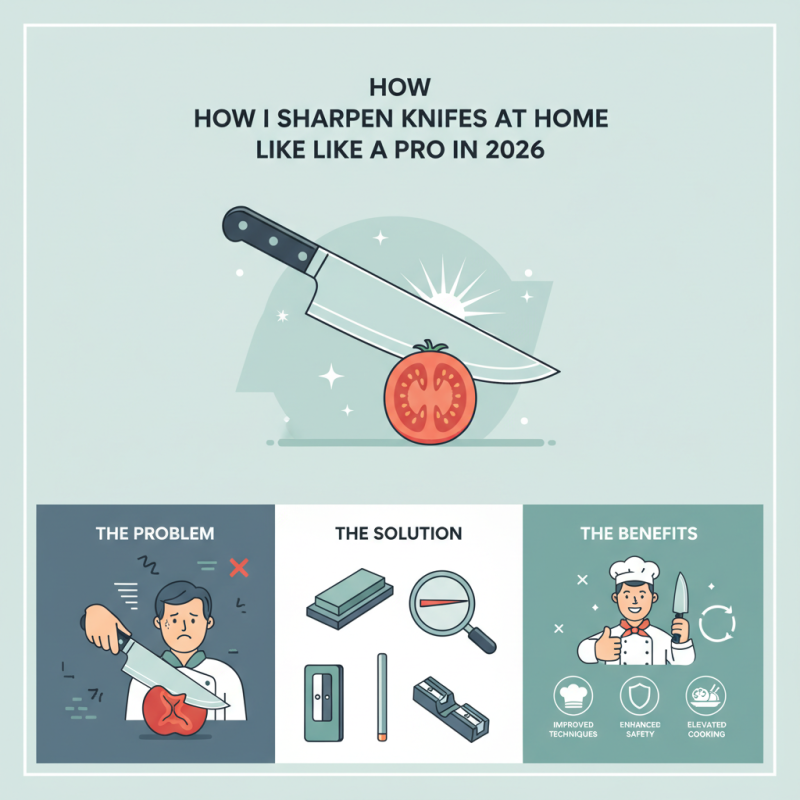
When it comes to sharpening knives, choosing the right tools is essential for achieving optimal results. There are various tools available, each designed for different needs. For instance, whetstones come in various grits. A coarse grit helps repair dull edges, while finer grits polish them. Mastering the art of using a whetstone can provide greater control over the sharpening process.
Another popular option is the electric sharpener. These are user-friendly and save time. However, they can remove more material than necessary, leading to a shorter lifespan for your knives. Always use them cautiously. Alternatively, pull-through sharpeners offer convenience but may not achieve the same level of sharpness as whetstones or professional methods.
Some may find honing rods overlooked in the sharpening process. These tools realign edges rather than sharpen them. Regular use can prolong the time between sharpening sessions. Sharpening can be intimidating and might require practice to perfect. Making an error can lead to uneven edges. Therefore, evaluating your technique and the tools you use is crucial for improvement.
Creating a safe workspace for knife sharpening is essential. Choose a flat, stable surface. A wooden cutting board or a designated sharpening stone stand works best. Keep the area clear of clutter. This prevents accidents and allows easy access to tools.
Proper lighting is crucial. Natural light is ideal, but a bright lamp will suffice. Ensure your sharpening tools are within reach. A dedicated container for loose items keeps everything organized. Safety gear, like cut-resistant gloves, might be overlooked, but they are important. Accidents can happen, and prevention is key.
Check your posture while sharpening. Stand or sit comfortably to avoid strain. It’s easy to forget the basics when focused on perfection. Ensure the knife's angle meets the sharpening surface correctly. This requires practice and patience. Don't rush the process; it takes time to master the skill. Reflect on your technique often. Fine-tuning increases effectiveness and safety.
Sharpening knives at home can be an art. With the right techniques, anyone can achieve professional-level results. The sharpening stone is key to this process. It requires patience and practice. Many chefs recommend using a water stone because it retains moisture. It creates a smooth edge, ideal for precision cutting.
To begin, ensure your stone is flat. Many stones wear unevenly, which affects sharpening. A flat surface allows for consistent results. Soak your stone in water for about 10 to 15 minutes before use. This prevents the blade from overheating, maintaining its hardness and integrity.
When using the stone, maintain a consistent angle between the blade and the surface. Experts suggest a 15 to 20-degree angle for most kitchen knives. Apply moderate pressure while sliding the blade along the stone. It's essential to alternate sides regularly. This creates an even edge. A recent industry report indicates that proper knife maintenance can improve cutting efficiency by up to 30%. However, many people struggle with retaining the correct angle and pressure. Reflecting on one’s technique is crucial to mastering knife sharpening.
Maintaining the right angle while sharpening knives is crucial for achieving sharpness. A consistent angle ensures even grinding and improves the knife's edge.
Beginners often struggle to maintain this angle. Using a guide can help, but experience is key. You might still find your angle fluctuating. That’s perfectly normal.
One effective method is the ‘two-finger’ technique. Place your fingers on the spine of the blade to determine the angle. If your fingers slip off, the angle isn’t right. It's a simple trick, but it requires practice. You might need to adjust your grip multiple times. Reflecting on these small changes allows for significant improvements.
Visual aids can enhance your sharpening skills. Consider using a marker to draw a line on the edge of the blade. This technique allows you to see where the steel is being removed. If the marker isn’t wearing off evenly, your angle might be inconsistent.
Take a moment to adjust and try again. Every small error is a learning opportunity. You'll sharpen not just knives but also your technique over time.
After sharpening your knives, proper cleaning and care are essential. Start by rinsing the blades with warm water to remove any metal filings or debris. Avoid using harsh detergents, as they can damage the blade's finish. Instead, a gentle soap will suffice. Use a soft sponge to wipe down both sides of the knife, paying attention to the handle as well.
Tips: Always dry your knives immediately after washing. Moisture can lead to rust and dullness over time. Store them in a knife block or magnetic strip. Avoid keeping them loose in a drawer, which can lead to nicks and edge damage. Regularly check the condition of your knives. It’s easy to forget about dull spots or these little imperfections over time.
Caring for the knives doesn't end with washing. Regular honing can keep them performing well. Invest some time in maintaining their sharpness. Wooden cutting boards can be gentle on your blades. Avoid glass or stone surfaces, as they can damage edges. Keep your knives away from high humidity to prevent corrosion. Regularly assess your storage method. It plays a key role in your knives’ longevity.
: There are various tools like whetstones, electric sharpeners, pull-through sharpeners, and honing rods.
Whetstones have different grits. Coarse grit repairs dull edges, while finer grits polish them.
Electric sharpeners can remove too much material, shortening the lifespan of your knives.
Honing rods realign knife edges and prolong the time between full sharpening.
Use a flat, stable surface, good lighting, and keep the area clutter-free for safety.
Consider using cut-resistant gloves and ensure an ergonomic posture to avoid strain.
Rinse blades with warm water, use gentle soap, and dry them immediately to prevent rust.
Store knives in a block or on a magnetic strip to avoid nicks and edge damage.
Regular honing and proper storage methods can maintain your knives' sharpness over time.
Regularly check their condition, avoid high humidity, and use wooden cutting boards for protection.
In "How to Sharpen Knives at Home Like a Pro in 2026," the article emphasizes the importance of understanding different sharpening tools to achieve optimal results. It begins by detailing the necessary preparation of your workspace, ensuring safety during the knife sharpening process. A comprehensive, step-by-step guide on using a sharpening stone is provided, highlighting techniques for maintaining the correct angle, which is crucial for effective sharpening.
Additionally, the article addresses the post-sharpening phase, focusing on the cleaning and care of knives to prolong their lifespan. This holistic approach not only teaches how to sharpen knives at home but also ensures that your kitchen tools are maintained in excellent condition for future use. By following these guidelines, anyone can master the art of knife sharpening safely and effectively.

DRS Boards