Knives are used every day, yet their storage is easy to overlook. A loose blade in a crowded drawer can cut a hand reaching for a spoon. A wet knife tucked into a block may also collect moisture and develop stains. Knowing how to store knives safely protects people, preserves the blades, and keeps routine kitchen tasks more predictable.
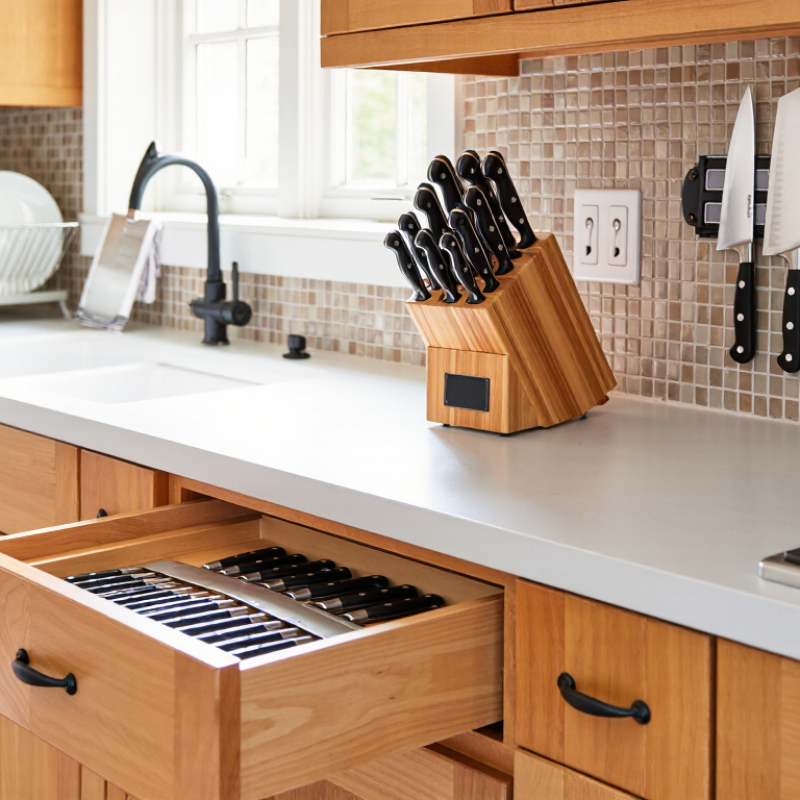
Choose storage that suits your kitchen and household. A knife block or drawer insert keeps blades separated and covered; check that each slot fits the knife without forcing it. A magnetic strip can work well, but it must be firmly mounted and placed beyond the reach of children. Small details matter. Wash and dry knives before storing them, and avoid leaving them hidden beneath dishes or towels. A dull or damaged blade deserves attention, too, since it may not cut as expected.
There is no single setup that fits every home. Limited counter space, curious children, and shared kitchens all change what is practical. I sometimes think a neat-looking display feels safer than it really is; placement and secure mounting matter more than appearance. Follow the knife maker’s care guidance, inspect storage regularly, and choose a system everyone in the household can use consistently. Safe storage is a modest habit, not a complicated project.
Understanding the Risks of Improper Knife Storage
A knife left loose in a crowded drawer can turn an ordinary search into a cut. Fingers reach past handles while a blade shifts beneath other utensils. The injury may be small, but an unexpected slice can make someone drop the knife or contaminate nearby food. Dull blades are not automatically safer; they may require extra pressure and slip.
Storage risks build quietly. A wet knife tucked into a block can trap moisture, encourage rust, and affect the handle over time. An overcrowded block can also hide which slot holds which blade. Magnetic strips reduce drawer contact, but only when firmly mounted and placed beyond children’s reach. A knife that slides off a weak strip is still a hazard. Details matter.
It is easy to think, “I’ll put it away in a minute.” That minute is when a blade may be left near a sink edge, buried in dishwater, or covered by a towel. Perfect habits are hard. Choose a dry, dedicated spot, and use a sheath or guarded block for loose storage. After washing, dry the blade and return it before moving on to the next task.
Why You Should Know How to Store Knives Safely
Improper storage can leave a cutting edge exposed to accidental contact. Compare how common storage methods protect the blade edge.
This is an illustrative design check, not injury-rate data: 1 means the cutting edge is left uncovered; 0 means it is covered during storage. Store knives securely and out of children’s reach.
Choosing a Safe Storage Method for Your Knives
Choosing a safe storage method starts with your kitchen, not with appearance.
A knife should stay dry, stable, and separate from other tools. If you reach for it with wet hands or crowded drawers, even a good storage system can feel awkward. Keep it simple. A countertop block works well when it sits away from the edge and has slots wide enough for clean, dry blades. Follow the block’s design so your fingers do not brush cutting edges while you search.
A magnetic strip saves drawer space and lets blades air-dry, but it needs firm installation and a location out of children’s reach. Attach each knife gently, spine first, rather than letting the edge snap against the strip. This helps protect both the blade and your fingers.
Still, a strip may not suit every household; people can bump it, and a busy wall is not always a safe wall. No method is perfect. A drawer insert is a calmer option if each knife has its own slot and the drawer stays securely closed.
For occasional use or travel between kitchens, blade guards can prevent accidental contact. They should only cover clean, dry knives, since trapped moisture can encourage corrosion.
I used to think storage was mostly about keeping counters tidy. That was incomplete. Consider who uses the kitchen, how much space you have, and whether you can put the knife away safely after washing. The best method is one you can maintain every day, even when dinner is rushed.
Cleaning and Drying Knives Before Storage
Cleaning and Drying Knives Before Storage
A knife can look clean while food residue remains near its handle or bolster. Wash it promptly with hot, soapy water, using a sponge or cloth to wipe from the spine toward the edge. Keep the blade pointed away from your hand. Rinse away soap and loosened debris. The CDC estimates that 48 million people in the United States get sick from foodborne illnesses each year. That estimate is not specific to knives, but it underscores why food-contact tools deserve careful cleaning.
Dry the knife completely before putting it away. Use a clean towel, paying attention to the handle and the area where blade and handle meet. Then let it air-dry briefly if moisture remains. Damp storage can encourage corrosion, especially around tiny scratches or joints. Do not leave a knife soaking in a sink; it can be hard to see and easy to grab by the blade. Even careful routines can miss a spot, so check both sides under good light.
Tips: Wash each knife after preparing raw meat, seafood, or produce, and before using it on another food. Dry it right away, then store it in a sheath, block, or drawer insert that keeps the blade covered and stable. A quick wipe is not enough.
Securing Knives in Their Chosen Storage System
Securing Knives in Their Chosen Storage System
A knife is only as secure as the place holding it.
In a drawer, use a fitted divider that keeps blades apart and handles easy to grasp. Never reach blindly into a crowded drawer. Small details matter. In a knife block, seat each blade fully, with its handle clear of the counter’s edge. A magnetic strip should be firmly mounted, high enough to avoid casual contact, and positioned so blades cannot slide or fall. Check the mount occasionally; a strip that feels loose needs attention.
The U.S. Consumer Product Safety Commission’s National Electronic Injury Surveillance System estimates product-related emergency department injuries from a sample of hospitals. Its data do not show how often a knife was stored unsafely, so they cannot prove one storage system is safest.
That limitation matters.
Choose a system that fits your household, then use it consistently: keep knives dry, return them after washing, and store them away from children’s reach. If a drawer divider shifts or a block traps moisture, change the setup. I might still forget to return a knife during a busy meal; that is exactly why storage should make the safe choice easy.
Inspecting Storage Areas and Knife Condition Regularly
A safe knife routine starts with the place where each knife rests. Once a week, check the drawer, block, or wall-mounted holder for crumbs, moisture, and loose parts. A damp drawer can encourage corrosion, while grit may dull an edge. Small details matter. Check beneath removable inserts and wipe corners with a clean, dry cloth. Never reach blindly into a drawer. Keep the storage area stable and dry, away from sink splashes.
Before putting a knife away, inspect its blade under good light. Look for chips, rust spots, or a bent tip, and check that the handle does not wobble. If it feels damaged, set it aside. Ask a qualified professional about repair or replacement. Do not keep using it as usual. A quick visual check can miss a small flaw, so run no fingers along the edge.
Storage should prevent blades from knocking together and keep them away from children and crowded work surfaces. Dry the knife completely before storing it, even after a quick rinse. I have rushed this step before and noticed spots later. It is an easy habit to overlook. A clean, dry storage area makes problems easier to spot during the next check.
Why You Should Know How to Store Knives Safely - Inspecting Storage Areas and Knife Condition Regularly
| Storage Area or Item |
What to Inspect |
Suggested Check |
Example Finding |
Recommended Action |
Status |
| Knife block |
Check that slots are clean and dry, the block is stable, and knives fit without forcing. |
Monthly, and after spills |
Block is steady; slots are dry and free of visible debris. |
Clean and fully dry the block if needed. Store each knife in a suitable slot with the blade protected. |
Suitable |
| Drawer with knife insert |
Confirm knives are separated, secured in the insert, and not loose among utensils. |
Weekly |
One knife has shifted partly out of its slot. |
Reposition it securely. Keep sharp knives in a fitted insert rather than loose in a drawer. |
Corrective action needed |
| Wall-mounted magnetic strip |
Check that the strip is firmly attached and knives are held securely with blades facing away from reach. |
Monthly |
Mounting is firm; knives are spaced apart and do not overlap. |
Keep the area clear and place or remove knives carefully, holding them by the handle. |
Suitable |
| Protective blade guards |
Inspect guards for cracks, loose fit, trapped moisture, or residue. |
Before storage |
One guard is damp after washing. |
Dry the knife and guard completely before covering the blade to reduce moisture buildup. |
Corrective action needed |
| Knife blades and handles |
Look for chips, cracks, corrosion, loose handles, or other visible damage. |
Monthly and before use |
Blade appears intact; handle is secure and dry. |
Set aside damaged knives for repair or safe disposal; do not return them to ordinary storage. |
Suitable |
| Storage location |
Check that the area is dry, stable, out of children’s reach, and away from edges or high-traffic paths. |
Monthly and after rearranging |
Storage is beside a counter edge where a knife could be knocked down. |
Move the storage to a stable, less exposed location that is inaccessible to children. |
Corrective action needed |
Inspection reminder: Clean and dry knives before storage, keep blades protected, and follow the storage system’s care instructions.
Conclusion
Knowing how to store knives safely helps prevent cuts, protect blade edges, and keep a kitchen organized. Improperly stored knives can shift in drawers, become difficult to see, or be reached accidentally. Choose a storage method that suits your space and keeps each knife stable and separated, such as a secure block, wall-mounted holder, or protective blade cover.
Before putting knives away, wash and dry them thoroughly to reduce residue, moisture, and corrosion. Place each knife carefully in its designated spot, making sure it is fully secured and that the blade cannot slip or protrude. Keep the storage area clear and away from places where knives might be knocked over or accessed unintentionally. Regularly inspect both the storage system and the knives for loosened fittings, damage, or signs of wear, and address any problems before they create a safety risk.

 DRS Boards