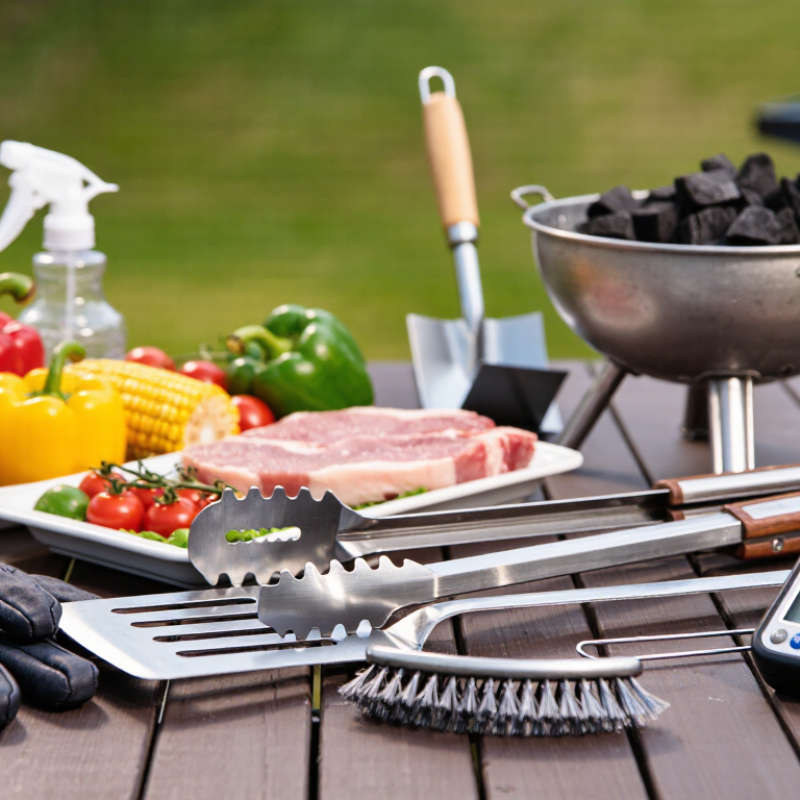
A successful barbecue begins before the first steak reaches the grate. The right tools help you control heat, handle food safely, and serve everything while it is still hot. So, what tools are needed for BBQ cooking? Start with sturdy, long-handled tongs, a wide spatula, a reliable instant-read thermometer, and a grill brush suited to your grate. Add heat-resistant gloves and a clean tray for raw ingredients. Simple gear. Better control.
Barbecue expert and author Steven Raichlen has described barbecue as “a way of life.” That spirit is part of the appeal, but good results also come from practical choices. A thermometer can reveal whether thick chicken is cooked through; tongs can turn vegetables without tearing them. Keep a water spray bottle nearby for flare-ups, but do not treat it as a substitute for managing the grill’s heat. A chimney starter can help light charcoal evenly, while a small metal ash tool makes cleanup easier. You may not need every gadget on day one. Honestly, a crowded tool kit can be more confusing than useful. This guide focuses on dependable essentials, optional upgrades, and the details that make each tool worth bringing to the barbecue.
Chinese barbecue is not one fixed technique. Across street stalls and home kitchens, cooks use direct heat, skewers, and broad metal griddles. Xinjiang-style lamb skewers sit close to hot charcoal, turning often so the edges brown without drying. In other settings, fish or eggplant may cook whole over gentler heat, then receive garlic, soy, or chili oil. Small pieces cook quickly; thicker cuts need a cooler side of the grill. Toasted cumin gives a useful aroma cue, but color alone can mislead.
The cooking method shapes the tools. Flat skewers keep thin slices from spinning, while round bamboo skewers suit smaller bites; soak bamboo before grilling. A wire grate works for vegetables and larger portions, and long tongs help turn food safely. Seasoning often comes in layers: salt before cooking, then cumin, chili, or sesame near the end, when spices are less likely to scorch. Crowded skewers cook unevenly. That spacing is easy to misjudge.
Tips: Set up a hot zone and a cooler zone. Turn skewers every minute or two, and check thick pieces at the center. Keep raw and cooked food on separate plates. If smoke rises sharply, reduce the heat or move food aside.
| Cooking Method | Common Foods | Essential Tools | Heat Source and Technique | Useful Practical Details |
|---|---|---|---|---|
| Skewer grilling (chuan'r) | Lamb, beef, chicken, vegetables, and tofu | Metal or bamboo skewers, charcoal grill, long-handled tongs, and seasoning shaker | Food is threaded onto skewers and grilled over direct heat, with frequent turning. | Soak bamboo skewers in water before grilling to reduce scorching. Keep a cooler area on the grill to move food away from flare-ups. |
| Grate grilling | Fish, shellfish, corn, eggplant, and sliced meat | Grill grate, grill basket or fish clamp, tongs, and heat-resistant brush | Food cooks directly on a grate above charcoal or another suitable heat source. | A basket or clamp helps hold delicate foods together and makes turning easier. Clean and lightly oil the grate to reduce sticking. |
| Flat-top grilling | Sliced meat, squid, tofu, and vegetables | Flat griddle, wide metal spatula, scraper, and long-handled tongs | Food cooks on a hot, flat metal surface, which distributes contact heat across the food. | Use a thin layer of cooking oil and avoid overcrowding the surface so food can brown rather than steam. |
| Foil-wrapped grilling | Fish, shellfish, mushrooms, and vegetables | Food-safe aluminum foil, tongs, and a covered grill or grill lid | Wrapped food cooks over or beside heat in a hot packet, retaining moisture and trapping aromatics. | Leave room inside the packet for steam to circulate. Open it carefully, directing escaping steam away from hands and face. |
| Rotisserie or spit roasting | Whole poultry and larger cuts of meat | Rotisserie spit, secure forks, drip tray, and heat-resistant gloves | Food rotates near a heat source, helping it cook more evenly and brown on multiple sides. | Secure the food firmly and use a drip tray to manage rendered fat. Check doneness with a food thermometer. |
| Indoor electric grilling | Skewers, sliced meat, seafood, and vegetables | Electric grill, tongs, heat-resistant utensils, and a cleaning brush suited to the appliance | An electric heating element provides controllable heat without burning charcoal. | Follow the appliance instructions, provide suitable ventilation, and keep the unit away from water and combustible materials. |
General safety: Use food-safe tools, separate utensils for raw and cooked food, and cook meat and seafood to safe internal temperatures. Keep charcoal grills outdoors and away from enclosed spaces.
It uses several methods, including direct charcoal heat, skewers, and broad metal griddles. Small pieces cook quickly. Whole fish or eggplant may need gentler heat and longer cooking.
Create a hot zone and a cooler zone. Sear thin pieces over stronger heat. Move thicker pieces aside when the surface darkens too quickly. Heat control is easy to misjudge.
Cut ingredients into similar pieces, roughly 2.5–3 centimeters wide. Similar sizes help food cook more evenly. Uneven chunks may burn outside while staying firm inside.
Flat metal skewers keep thin slices from spinning during turning. Round wooden skewers suit smaller bites. Soak wooden skewers for 20–30 minutes before grilling. They can still scorch.
Add salt before cooking. Apply cumin, chili, or sesame closer to the end. This reduces scorching over strong heat. Color alone can mislead.
Turn them about every one or two minutes. Use long-handled tongs and leave small gaps between pieces. Crowded skewers cook unevenly. That mistake happens often.
Use an instant-read thermometer rather than color alone. Poultry should reach 165°F (74°C). Whole cuts of meat need 145°F, followed by a three-minute rest. Ground meat needs 160°F.
Keep raw meat and ready-to-eat vegetables on separate boards and trays. Use clean tongs for cooked food. Never place cooked pieces on a raw-meat plate. Small detail. Big consequence.
Chinese BBQ is more than cooking meat over a fire; it is a practical combination of preparation, heat control, and serving. This article explains the main Chinese BBQ methods, including skewer grilling, flat-surface cooking, and charcoal-based roasting. It also introduces what tools are needed for BBQ cooking, such as knives, cutting boards, bowls for marinades, skewer holders, and containers for organizing ingredients. Proper preparation helps food cook evenly and makes the entire process safer and more efficient.
The guide also covers grills and cooking equipment suitable for different BBQ styles, along with tongs, spatulas, brushes, heat-resistant gloves, thermometers, and serving trays. These tools help users manage temperature, turn food carefully, prevent burning, and serve cooked items hygienically. Finally, it explains how to choose BBQ tools made from safe, durable, and easy-to-clean materials, with attention to stable construction, comfortable handling, and suitability for repeated outdoor or indoor use.

 DRS Boards